
Wisdom Teeth & Extractions in Ammon, ID
New Patient Special
When removal is the right call

Step 1: Consultation and imaging
We'll take digital X-rays or a CBCT scan to evaluate the tooth and surrounding area. We'll go over what we find, explain your options, and confirm the extraction plan before moving forward.
Step 2: Sedation and anesthesia
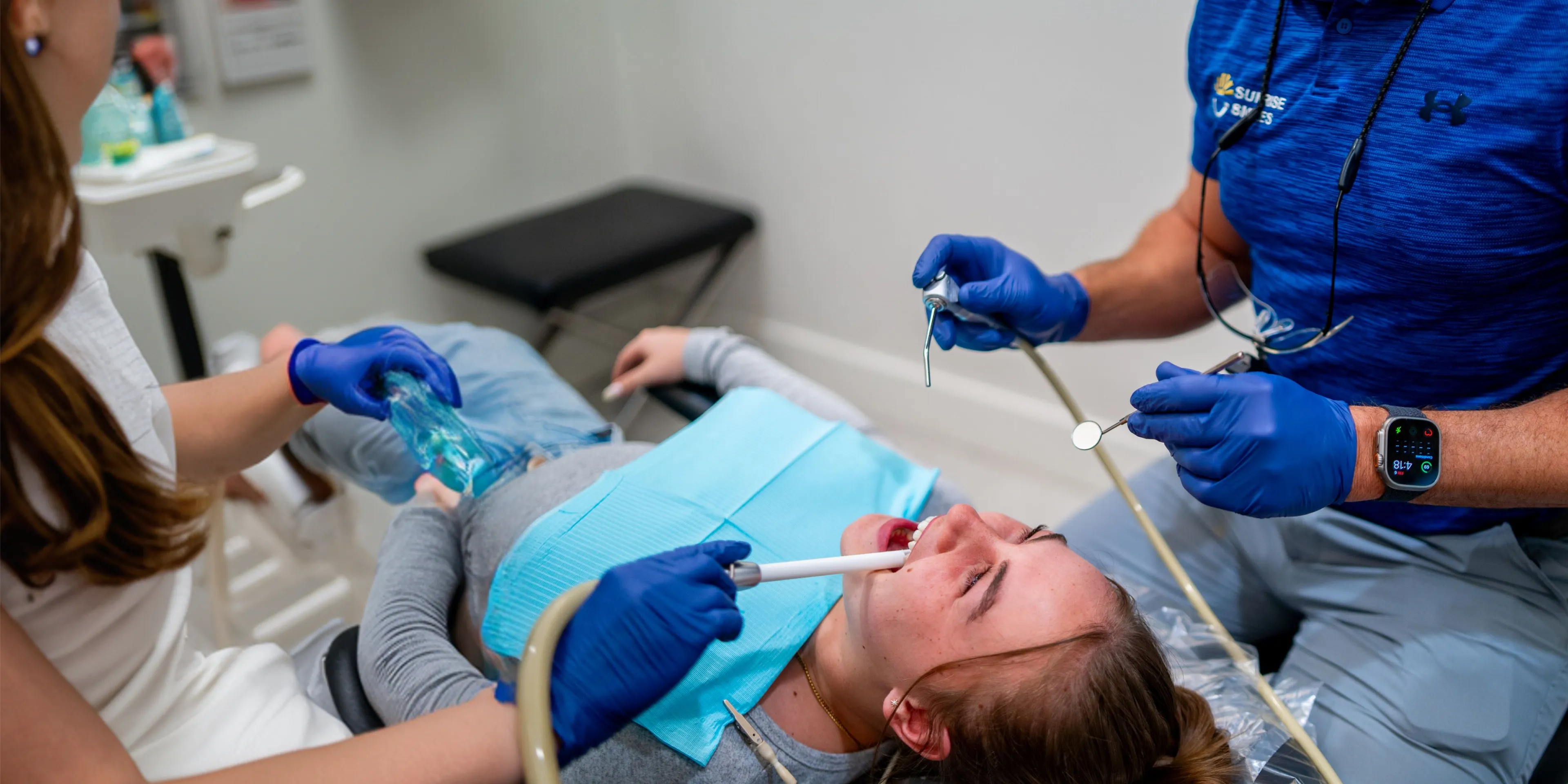
Once you're ready, we'll administer your chosen sedation option and apply local anesthesia to fully numb the area. We won't begin until you're completely comfortable.

Step 3: Extraction
For a simple extraction, the tooth is loosened and removed in one piece. For impacted wisdom teeth or more complex cases, a small incision may be needed to access the tooth. We work efficiently to keep the procedure as brief as possible.
Step 4: Recovery and aftercare
Once the extraction is complete, we'll place gauze and monitor you briefly before you're ready to go. We'll review your aftercare instructions in detail and schedule a follow-up if needed. If you received IV sedation, you'll need a ride home.

Check your insurance

Common reasons for tooth extraction
Extractions are recommended when a tooth cannot be saved or is causing harm to surrounding teeth and structures. Common reasons include:
- Severe decay that cannot be restored with a filling or crown
- Advanced gum disease that has compromised the tooth's support
- A cracked or fractured tooth that cannot be repaired
- Infection or abscess that has not responded to other treatment
- Impacted wisdom teeth causing pain, crowding, or infection risk
- Preparation for orthodontic treatment when there isn't enough space
- A baby tooth that hasn't fallen out on its own

About wisdom teeth
Wisdom teeth are the last molars to come in, usually between the ages of 17 and 25. Many people don't have enough room in their jaw to accommodate them, which leads to impaction, crowding, pain, and infection. Not everyone needs their wisdom teeth removed, but regular monitoring is important. We'll take X-rays to track their position and recommend removal if they pose a risk.
Signs your wisdom teeth may need to come out:
- Pain or pressure at the back of the jaw
- Swelling or tenderness around the gums
- Difficulty opening your mouth fully
- Repeated infections in the area
- Crowding or shifting of nearby teeth

Dentistry that feels like family
Spanish-speaking care available
Comfort for anxious patients




Aftercare and recovery
Most patients recover from a straightforward extraction within a few days. A few things to keep in mind:
- Bite gently on gauze for the first hour to control bleeding
- Avoid rinsing, spitting forcefully, or using a straw for the first 24 hours
- Stick to soft foods for the first day or two
- Take any prescribed medication as directed
- Apply a cold compress to reduce swelling during the first 24 hours
- Rest and avoid strenuous activity for the remainder of the day
We'll send you home with detailed aftercare instructions and are always available if you have questions during your recovery.

Dentistry that works for your life
Convenient hours, real flexibility
Same-day solutions
A team that gets to know you
Affordable, honest care
Frequently Asked Questions
Is sedation available for wisdom tooth removal?
Yes. Laughing gas, oral sedation, IV sedation, and hospital-based general anesthesia are all available. We'll help you choose the right level of support based on the complexity of your case and your comfort level.
What are my options for replacing an extracted tooth?
We offer dental implants, dentures, and other restorative solutions. If you need a tooth replaced, we'll talk through your options and help you choose the right fit for your goals and budget.
Will I need a bone graft after my extraction?
If you plan to replace the tooth with a dental implant, a bone graft may be recommended to preserve the socket. We'll let you know at your consultation if this applies to your case.
How many teeth can be extracted in one visit?
That depends on your individual situation and the complexity of the extractions. We'll discuss what's appropriate at your consultation.
Do all wisdom teeth need to be removed?
Not always. Some wisdom teeth come in properly and cause no issues. We monitor them with regular X-rays and only recommend removal if they are impacted, causing pain, or posing a risk to surrounding teeth.
What is dry socket and how do I avoid it?
Dry socket occurs when the blood clot that forms in the extraction site is dislodged before healing is complete. To avoid it, don't use a straw, spit forcefully, or smoke for at least 72 hours after your procedure.
Can I eat before my extraction appointment?
If you're having laughing gas or local anesthesia only, you can eat normally beforehand. If you're having IV sedation or oral sedation, we'll give you specific fasting instructions ahead of your appointment.
How long does recovery take?
Most patients feel back to normal within two to three days after a simple extraction. Wisdom tooth removal may take three to five days. Swelling and mild soreness are normal during this time.
Does a tooth extraction hurt?
The area is fully numbed before we begin, so you should not feel pain during the procedure. Some pressure and movement is normal. Most patients are surprised by how manageable it is.
How do I know if I need a tooth extracted?
The best way to find out is to come in for an exam. We'll take X-rays, assess the tooth, and give you a straightforward recommendation. We only suggest extraction when it's truly the best option.
Located in Ammon, ID
Sunrise Smiles Dentistry is located at 2641 S 25th East in AmSunrise Smiles Dentistry is located at 2641 S 25th East in Ammon, ID, next to Cafe Sabor in the Edwards Theatre Plaza. We proudly serve Ammon, Idaho Falls, Shelley, Rigby, and Rexburg.mon, ID.
